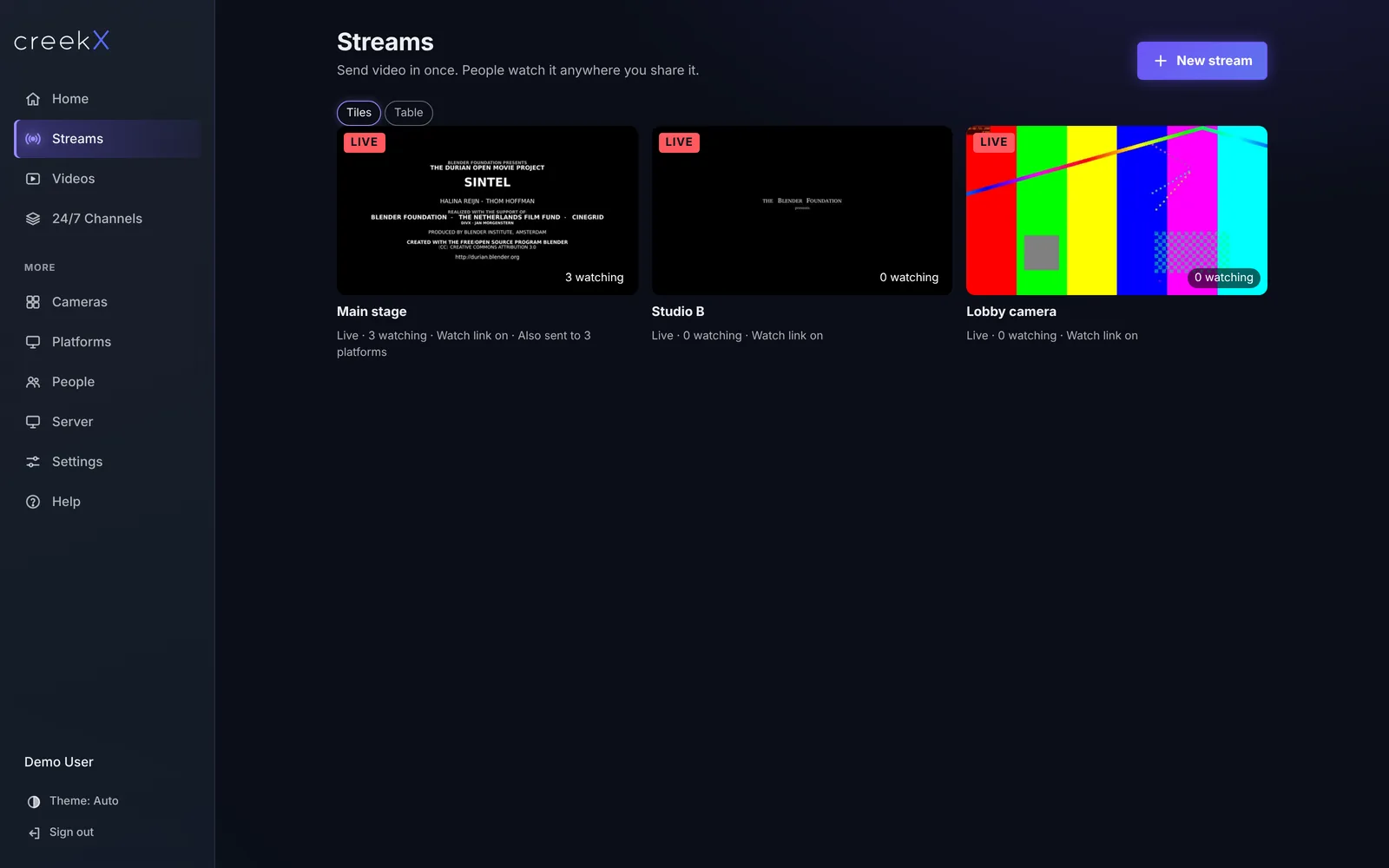
01Live streaming
Receive RTMP, SRT, RTSP or WebRTC video. Viewers can watch through WebRTC, HLS or low-latency HLS, with several quality levels where the server has been sized for transcoding.
0224/7 channels
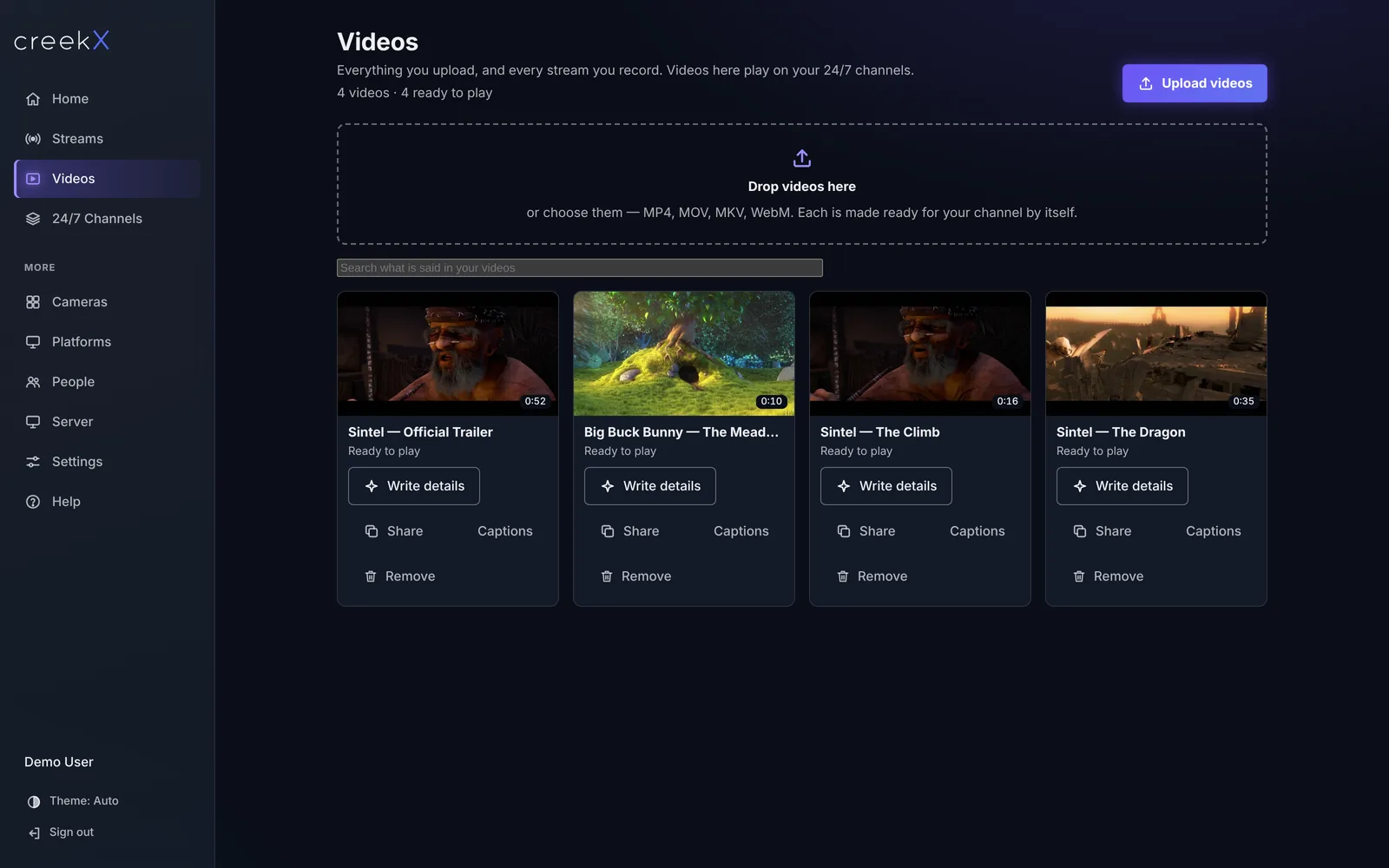
Upload videos, arrange a schedule and keep a TV-style channel running between live contributions. The scheduling system refills the channel instead of requiring someone to provide a live source continuously.
03Viewer access
Protect viewing with signed links, viewer tokens, IP allow-lists and blocks. An optional approval check can ask your own system to authorise a stream or viewer, while connection logs record when and how viewing occurred.
04Video library and captions
Store and prepare videos for channels or on-demand viewing. Captions are generated on your server; their speed and accuracy depend on its hardware and the language being spoken.
05Supporting live-video tools
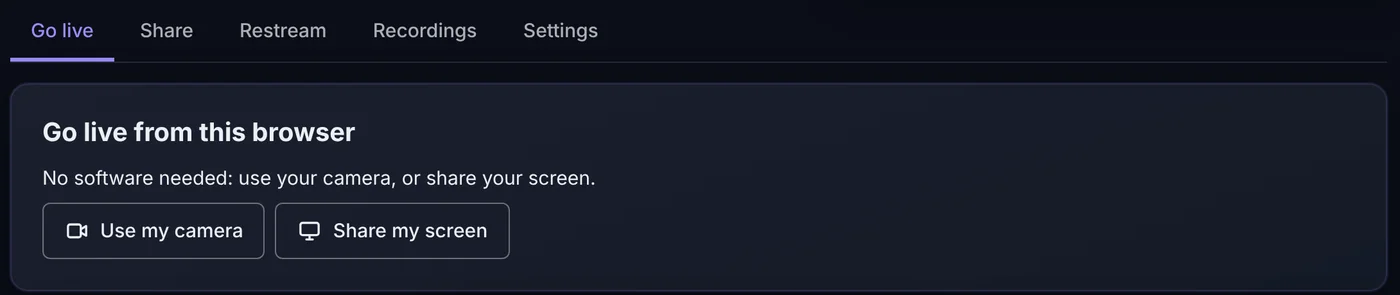
Send a stream to several external destinations, open small live rooms in a browser, record streams and connect operational workflows through the REST API and webhooks.